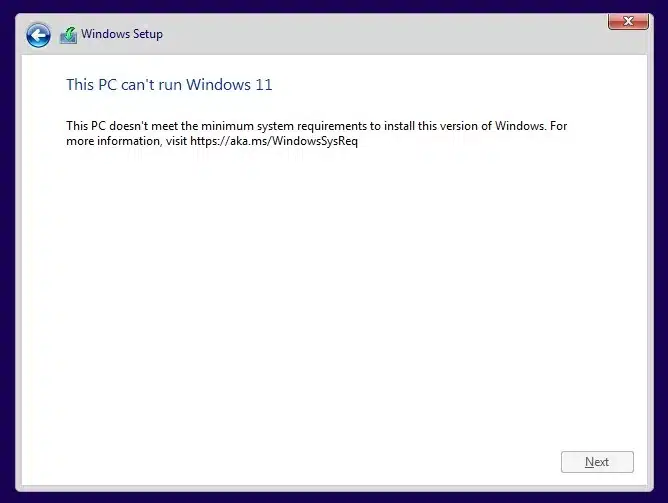
Have you encountered the frustrating message "This PC can't run Windows 11" while attempting to install Windows 11 on Hyper-V? Don't worry; you're not alone. This issue often arises due to specific configurations or settings within Hyper-V. In this guide, we'll walk you through the steps to resolve this error and successfully install Windows 11 on Hyper-V.
This PC Can't Run Windows 11
Error: This PC can't run Windows 11. This PC doesn't meet the minimum system requirements to install this version of Windows. For more information, visit https://aka.ms/WindowsSysreq.
Confirm the VM Is Generation 2
Before touching TPM settings, confirm your VM was created as a Generation 2 virtual machine. TPM (vTPM) and Secure Boot -- both required by Windows 11 -- are only available on Generation 2 VMs in Hyper-V; Generation 1 VMs don't expose these options at all, and no amount of settings-tweaking will get a Generation 1 VM past this error. You can check the generation on the VM's Summary tab in Hyper-V Manager. If your VM is Generation 1, you'll need to create a new Generation 2 VM and reinstall (or migrate the disk) -- there's no supported in-place upgrade from Generation 1 to Generation 2.
Enabling Trusted Platform Module (TPM) and Secure Boot in Hyper-V VM
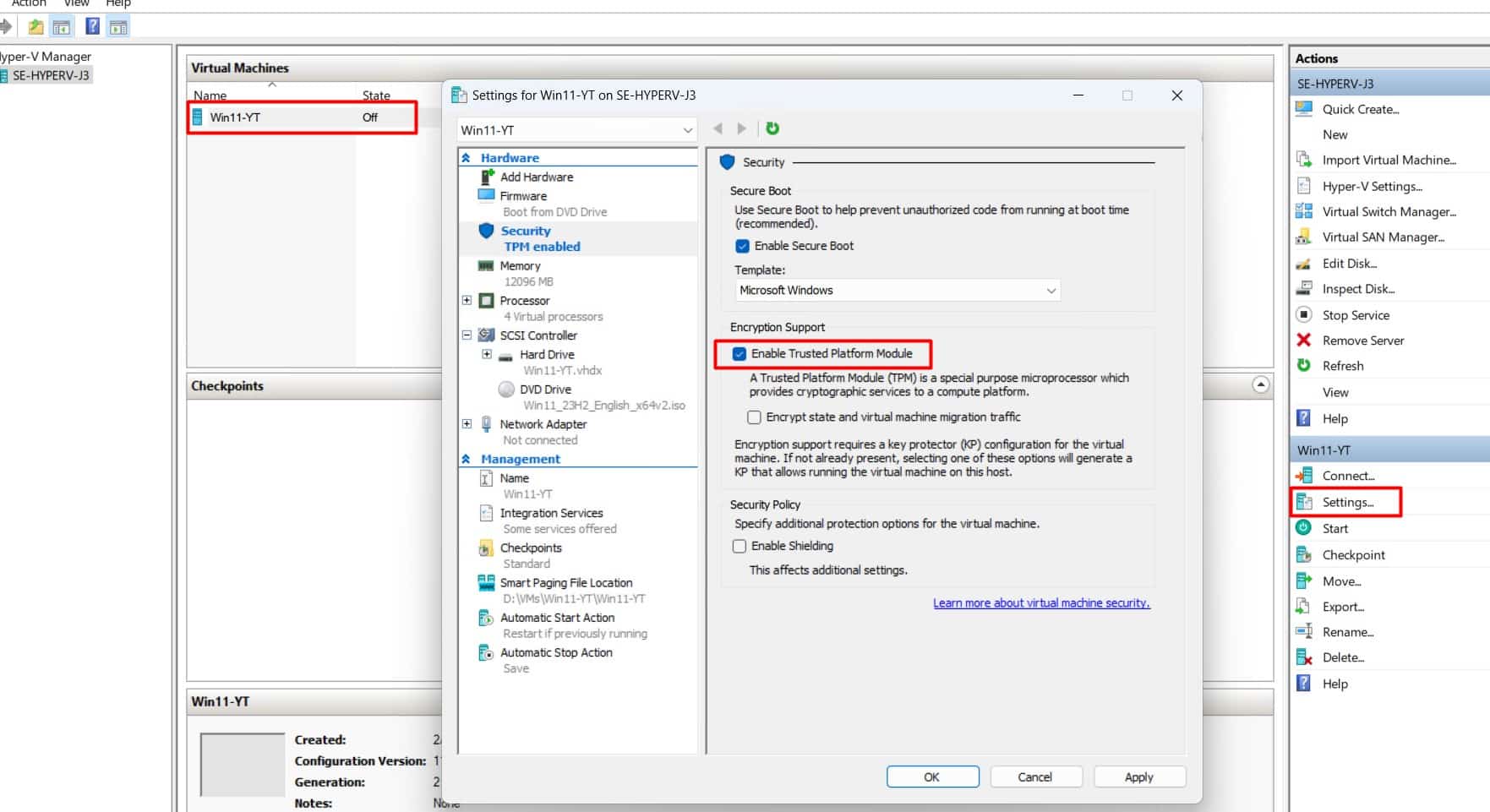
One common culprit behind the "This PC can't run Windows 11" error is the absence of Trusted Platform Module (TPM) support -- but a missing or misconfigured Secure Boot setting causes the same error and is often overlooked. Windows 11 requires both. To address this:
- Shut down the virtual machine (VM) running Windows 11.
- Open Hyper-V Manager.
- Right-click on your VM and select "Settings" or choose "Settings" from the Actions Pane on the right side of the window.
- Navigate to the "Security" tab.
- Confirm Enable Secure Boot is checked, with the template set to Microsoft Windows.
- Check the box next to "Enable Trusted Platform Module."
- If either option is greyed out, it indicates that the VM is still running (or that the VM is Generation 1 -- see above). Stop the VM and then try again.
- Start the VM once more and proceed with the Windows 11 installation.
If a VM that previously ran fine suddenly fails to start after a Windows host update, temporarily disabling TPM can help you confirm whether the update is the cause -- Hyper-V hosts have occasionally shipped cumulative updates that broke vTPM-enabled VMs, with Microsoft following up with out-of-band fixes. Check Microsoft's Windows release health documentation if you suspect this.
Adjusting Resource Allocation
If enabling TPM didn't resolve the issue, inadequate resource allocation could be to blame. Windows 11 has minimum system requirements that must be met for successful installation. Ensure that your VM meets these requirements:
- A 64-bit CPU with Virtualization Support enabled in the BIOS.
- At least 4GB of RAM is allocated to the VM.
- At least 2 vCPUs are allocated to the VM.
- At least 64GB of storage is allocated to the VM's virtual hard disk.
- Internet connectivity is typically achieved by setting the Hyper-V network settings to the default switch.
To adjust resource allocation:
- Shut down the VM.
- Right-click on the VM in Hyper-V Manager and select "Settings."
- Navigate to the "Processor" and "Memory" tabs to ensure adequate resources are allocated.
- Adjust settings as needed to meet or exceed Windows 11's minimum requirements.
- Restart the VM and proceed with the installation.
By following these steps, you should be able to overcome the "This PC can't run Windows 11" error on Hyper-V and successfully install Windows 11. Remember to check the VM generation, TPM and Secure Boot settings, and resource allocation to ensure your VM meets the necessary criteria for Windows 11 compatibility.
Related Reading
- Fixing the "Virtualization Support Not Detected" Error in Docker -- another common virtualization-enablement issue rooted in the same BIOS/UEFI settings
- How to Create a New Virtual Machine in VMware Workstation 15 -- if you're comparing Hyper-V against VMware for your test VMs
- Windows Update Logs in Windows 11 (& 10): Where They Are and How to Read Them -- useful if a host update is the reason a previously working VM stopped booting